
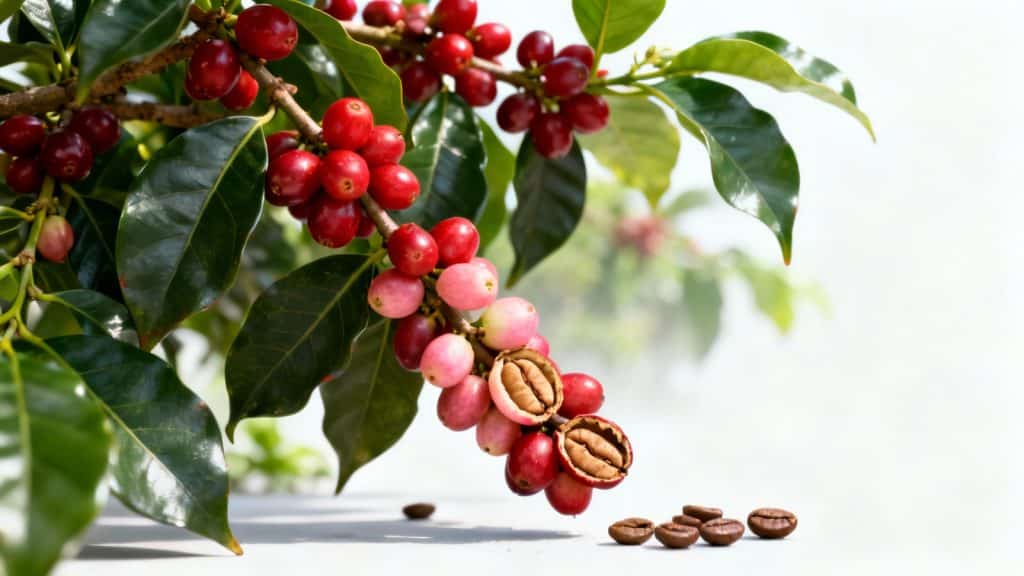
Arabian coffee, scientifically known as Coffea arabica, represents the world’s most beloved and economically significant coffee species. Originating from the highlands of Ethiopia, this remarkable plant produces the aromatic beans that fuel our daily rituals across the globe. Understanding its characteristics, care requirements, and cultural importance reveals why this species dominates the coffee industry.
Scientific classification
Origins and global distribution
The birthplace of coffee lies in the ancient highlands of Ethiopia, where wild Coffea arabica still grows naturally today. From these mountainous regions of africa, the plant spread throughout arabia, giving it its common name. The ethiopian heritage remains visible in modern coffee culture, with traditional ceremonies and brewing methods still practiced across the continent.
Today, coffee plantations span the globe between the Tropics of Cancer and Capricorn. Major producing regions include colombia, guatemala, costa rica, and kenya in africa and america respectively. Countries like nicaragua, honduras, and salvador in central america have built their economies around coffee production, while nations such as indonesia, india, and sri lanka contribute significantly to asian markets.
Never Kill a Plant Again
The plant has also found suitable growing conditions in australia, particularly in Queensland’s subtropical zone. Even vietnam has emerged as a major producer, though primarily of robusta varieties rather than the premium arabica discussed here. Images from these diverse regions showcase the adaptability of coffee cultivation across different terrains and climates.
Botanical characteristics
Coffea arabica presents as an evergreen shrub with distinctive glossy leaves arranged in opposite pairs. The leaves display a dark green color with prominent veining, creating an attractive appearance that makes the plant suitable for ornamental purposes beyond commercial cultivation. The plant’s natural growth habit tends toward a bushy, multi-stemmed structure when left unpruned.
White, star-shaped flowers appear in clusters along the branches, emitting a sweet, jasmine-like fragrance that attracts pollinators. These blooms are self-pollinating, which contributes to the genetic stability of arabica varieties. The flowering season typically occurs during spring and early summer in temperate zones, though timing varies significantly based on geographic location and local climate patterns.
The root system develops extensively in well-draining soils, with a taproot extending deep while lateral roots spread near the surface. This dual root structure allows the plant to access both deep groundwater and surface nutrients effectively. Understanding these characteristics helps growers optimize planting conditions for maximum yield and plant health. Just as learn about black cherry care requires attention to specific growing conditions, coffee plants thrive with proper soil preparation and environmental management.
Growing conditions and care
Coffee arabica requires specific environmental conditions to thrive and produce quality fruit. The plant prefers temperatures between 60-70°F with minimal fluctuation, making highland regions ideal for cultivation. Altitude plays a crucial role, with the best arabica coffee grown between 2,000-6,000 feet above sea level where cooler temperatures slow fruit maturation and enhance flavor development.
Soil requirements include well-draining, slightly acidic conditions with a pH between 6.0-6.5. Rich volcanic soils found in regions like guatemala and costa rica provide optimal nutrition, though careful soil amendment can create suitable growing conditions elsewhere. Regular moisture is essential, but waterlogged conditions quickly damage the root system and reduce plant vigor.
Shade management represents a critical aspect of coffee care, as arabica naturally grows under forest canopy in its native ethiopia. Providing 40-60% shade through companion trees or shade cloth protects plants from excessive sun exposure while maintaining adequate light for photosynthesis. Popular shade trees include nitrogen-fixing species that improve soil fertility naturally.
Tap to scan your plant
This feature requires the Plantalya app. Scan any plant instantly with your camera!
Scan Your Plant — Download Free AppPruning and maintenance
- Remove suckers and water shoots regularly to maintain plant structure
- Prune lower branches to improve air circulation and prevent disease
- Thin overcrowded areas to ensure adequate light penetration
- Remove dead or diseased wood promptly to prevent infection spread
Coffee fruit and harvest
The edible fruits of Coffea arabica, known as coffee cherries, develop slowly over 6-8 months after flowering. Initially green, the cherries gradually turn yellow, then orange, and finally deep red when fully ripe. Each cherry typically contains two seeds (coffee beans) surrounded by sweet pulp, though occasionally single-seeded “peaberry” fruits occur.
Harvesting timing proves critical for quality, as only fully ripe cherries produce the best coffee. Hand-picking allows selective harvesting of ripe fruit, though this labor-intensive method increases production costs. Strip-picking harvests all fruit regardless of ripeness, requiring careful sorting later to maintain quality standards. Modern images of harvest operations showcase both traditional and mechanized approaches across different regions.
The cherry pulp itself is edible and sweet, with a flavor reminiscent of cranberries or grapes. In some regions, coffee cherries are processed into beverages, jams, or dried as snacks. This utilization of the entire fruit reduces waste and provides additional income streams for coffee farmers, particularly in peru, mexico, and jamaica where value-added processing has gained popularity. Similar to how explore black raspberry characteristics reveals the versatility of fruit crops, coffee offers multiple harvesting and processing opportunities.
Processing and flavor development
After harvest, coffee cherries undergo processing to extract the green coffee beans. The wet method involves removing pulp immediately and fermenting the beans in water, producing cleaner, brighter flavors characteristic of colombia and guatemala coffees. The dry method sun-dries whole cherries before hulling, creating fuller-bodied coffees with fruity notes typical of ethiopian and brasil varieties.
Regional variations in processing create distinct flavor profiles that coffee enthusiasts can identify by origin. Costa rica’s honey process partially removes pulp before drying, balancing the characteristics of both wet and dry methods. Meanwhile, traditional ethiopian processing preserves ancestral techniques that highlight the complex flavors inherent in the birthplace of coffee.
Economic and cultural significance
Coffee production supports millions of families across africa, america, and asia, making it one of the world’s most important agricultural commodities. Small-holder farmers in countries like kenya, nicaragua, and honduras depend on coffee as their primary income source, while larger plantations in colombia and brazil employ thousands of workers during harvest seasons.
The cultural impact extends far beyond economics, with coffee ceremonies in ethiopia, cafe culture in france, and specialty coffee movements worldwide. Images of traditional preparation methods showcase the diversity of coffee culture, from turkish coffee pots to ethiopian ceremonial equipment. Each region has developed unique customs around coffee consumption that reflect local traditions and social structures.
Never Kill a Plant Again
Sustainable farming practices are increasingly important as climate change threatens traditional growing regions. Many producers are adopting shade-grown methods, organic certification, and direct-trade relationships to ensure economic viability while protecting environmental resources for future generations.
Coffea arabica stands as more than just an agricultural crop; it represents a bridge between cultures, economies, and traditions worldwide. From its ethiopian origins to its global cultivation, this remarkable plant continues to connect people through shared appreciation for its complex flavors and rich heritage. Whether grown in the highlands of colombia or the volcanic soils of guatemala, coffee arabica remains the foundation of one of humanity’s most beloved beverages.


